A Market Research Analysis Deck is one of the most valuable business documents for companies that want to understand their market, customers, competitors, and industry trends before making strategic decisions. Whether you are launching a startup, introducing a new product, expanding into a different country, or preparing an investor presentation, a well-structured market research analysis deck helps transform raw information into actionable business insights. Instead of relying on assumptions, organizations can use reliable research findings to reduce risk and improve decision-making.
Modern businesses generate enormous amounts of information every day. Customer behaviour, purchasing habits, online engagement, demographic data, and competitor activities all contribute to a constantly changing marketplace. A professional market research analysis deck organizes these findings into a logical presentation that executives, investors, stakeholders, and team members can quickly understand.
Companies of every size—from startups to multinational corporations—benefit from creating market research presentations. A small business can identify profitable customer segments, while large enterprises can evaluate market expansion opportunities, monitor competitors, and forecast future industry developments.
A successful market research deck combines quantitative data, qualitative insights, visual storytelling, and strategic recommendations. Rather than overwhelming readers with spreadsheets and reports, it highlights the most important findings that influence business decisions.
This comprehensive guide explains everything you need to know about creating a professional Market Research Analysis Deck, including its purpose, structure, research methodology, essential slides, data visualization techniques, competitor analysis, customer segmentation, SWOT analysis, market sizing, and best practices for presenting actionable insights.
What Is a Market Research Analysis Deck?
A Market Research Analysis Deck is a structured presentation that summarizes research findings about a specific market or industry. It combines market statistics, customer research, competitive intelligence, trend analysis, and business recommendations into a clear presentation format.
Unlike lengthy research reports, a presentation deck focuses on communicating insights efficiently. Decision-makers can quickly understand the current market landscape without reading hundreds of pages of documentation.
These decks are commonly used during strategic planning, investor meetings, product launches, annual business reviews, mergers and acquisitions, and executive planning sessions.
The primary objective is to convert research into strategic recommendations that support better business decisions.
When prepared correctly, a market research analysis deck becomes an essential reference document for multiple departments, including marketing, sales, finance, operations, and executive leadership.
Why Businesses Need Market Research
Market research reduces uncertainty. Instead of guessing what customers want, companies can make informed decisions supported by real evidence.
Research helps identify emerging trends before competitors recognize them.
It also uncovers customer pain points that create opportunities for innovative products and services.
Competitive analysis enables organizations to benchmark pricing, positioning, marketing strategy, and customer experience.
Ultimately, market research increases the likelihood of sustainable business growth.
Essential Components of a Market Research Analysis Deck
Executive Summary
The executive summary introduces the purpose of the research, highlights key findings, and provides a concise overview of the most important business recommendations.
This section should answer three questions: What did we research? What did we discover? What should we do next?
Busy executives often read only the executive summary before deciding whether to explore the remaining slides.
Therefore, clarity and brevity are essential.
The summary should immediately communicate business value.
Market Size and Industry Analysis
Understanding TAM, SAM, and SOM
One of the most important sections of any market research presentation explains market potential using Total Addressable Market (TAM), Serviceable Available Market (SAM), and Serviceable Obtainable Market (SOM).
These metrics help stakeholders understand both the opportunity size and realistic growth expectations.
Industry growth rates, economic conditions, customer demand, regulatory changes, and technological innovation should also be analysed.
Charts and graphs make these complex datasets much easier to understand.
Reliable data sources significantly improve presentation credibility.
Competitor Analysis
Evaluating the Competitive Landscape
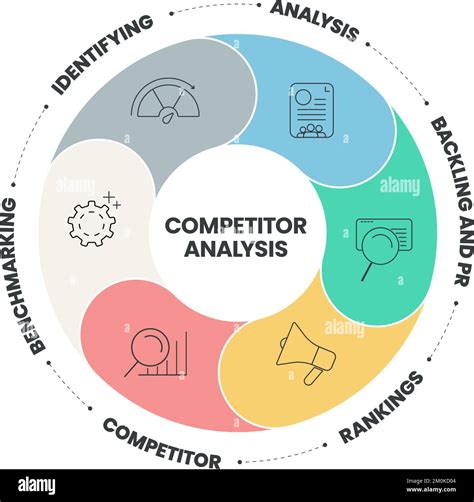
Competitor analysis identifies direct, indirect, and emerging competitors. Businesses compare pricing strategies, marketing channels, product quality, customer satisfaction, distribution models, and brand positioning.
A competitive matrix clearly highlights strengths and weaknesses across multiple competitors.
SWOT analysis provides additional strategic context.
Understanding competitor behaviour allows organizations to differentiate their products more effectively.
Competitive intelligence should be updated regularly because markets evolve continuously.
Customer Research and Segmentation
Building Customer Personas
Customer segmentation divides audiences into meaningful groups based on demographics, behaviour, geography, interests, income, or purchasing patterns.
Detailed buyer personas help marketing teams create personalised campaigns that improve conversion rates.
Customer interviews, surveys, analytics platforms, CRM systems, and social listening tools provide valuable insights.
Understanding customer motivations enables companies to develop products that solve real problems.
Strong customer knowledge often becomes a long-term competitive advantage.
Presenting Data Effectively
Choosing the Right Visualizations
Charts, graphs, heat maps, comparison tables, dashboards, and infographics make complex information easier to understand.
Every chart should answer a specific business question instead of simply displaying numbers.
Use consistent colours, typography, spacing, and layouts throughout the presentation to improve readability.
Avoid clutter by focusing only on the most relevant metrics.
Clear visual storytelling helps executives make faster, more confident decisions.
Best Practices for Creating a High-Impact Market Research Analysis Deck
Focus on Actionable Insights
Every section of the presentation should lead naturally toward a business recommendation. Data without interpretation rarely drives meaningful decisions.
Support every conclusion with credible evidence from reliable sources.
Prioritize business impact over excessive technical detail.
Maintain a logical narrative that guides the audience from market overview to strategic recommendations.
Review and update the deck regularly to reflect changing market conditions and emerging opportunities.
Conclusion
A professional Market Research Analysis Deck transforms research into practical business intelligence that supports strategic decision-making. By combining customer insights, competitor analysis, market sizing, trend evaluation, and clear recommendations, organizations can reduce uncertainty and identify new opportunities for sustainable growth. Whether the audience consists of executives, investors, clients, or internal teams, a well-designed market research presentation communicates complex information in a format that is both engaging and actionable.
Have you created a Market Research Analysis Deck before? Share your experience, favourite research tools, or presentation tips in the comments, and consider sharing this article with colleagues who want to build stronger, data-driven business strategies.